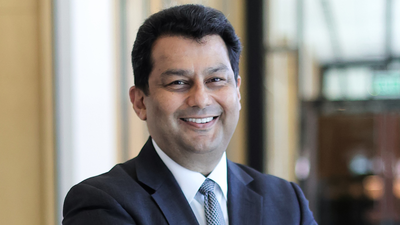
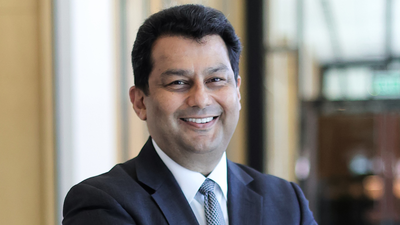
Vikram Sahu, India CEO and Country Executive, Bank of America, hosted the bank’s investor conference in India with foreign institutional investor participation rising 20% from the previous year. According to Sahu, despite the short-term challenges interest in India remains undiminished.Q. With the monetary policy committee meeting around the corner what do you expect from the policymakers?A: India is navigating a complex and evolving environment shaped by both domestic pressures and external challenges. There were border tensions, shifting trade dynamics, and conflict in West Asia, which had cascading impact on the Indian economy. But our government has responded to these situations with notable resilience and policy agility. For me, what stands out is the administration’s pragmatic and responsive approach. Policymakers have consistently sought to maintain momentum, identifying opportunities even amid volatility. This is reflected in the steady progression of trade engagements, including the framework agreement with the US, as well as continued reform agenda. Importantly, reform has not been limited to headline initiatives. There has been a sustained effort to streamline processes and reduce what one might call ‘regulatory cholesterol’, improving the overall ease of doing business. Policymakers have shown a willingness to listen, adapt, and recalibrate. Based on this track record, I would expect continuity in the approach with a clear focus on maintaining stability while advancing long-term growth priorities. Q. Should India take steps like in 2013 to attract foreign capital, such as underwriting FX risk?A: I would avoid prescribing specific policy tools. That said, foreign direct investment has not kept pace with India’s own ambitions. The government is well aware of this and has been steadily focused on improving the operating environment. Ultimately, capital responds to fundamentals. As regulatory friction is reduced and the ease of doing business continues to improve, foreign investment will follow in a more durable and sustained manner. Q. What ails foreign investment in India?A: If we look at foreign institutional investors, participation is currently at its lowest level in over a decade. The initial driver was valuation. About 18 months ago, India was trading at a significant premium to its historical averages, which set a very high bar for expectations. Since then, we have seen a series of external uncertainties, from trade negotiations with the US to the conflict in West Asia impacting energy dynamics, along with broader implications of the rapid rise of AI on India’s growth narrative. When you combine elevated valuations with a more uncertain macro backdrop, it is only natural for investors to step back, recalibrate, and wait for more attractive entry points.There is nothing unusual about this. It is a cycle we have seen before, and it tends to correct itself as valuations and expectations come back into alignment. Q. Where do things stand now for FIIs?A: Trade-related concerns have moderated, with several agreements announced, including the framework with the US, and importantly, trade flows have remained resilient. West Asia continues to be a source of uncertainty. A swift resolution would remove a meaningful overhang, while a prolonged situation would remain a headwind, though one that is not unique to India. What is encouraging is the clear shift in investor behavior. Participation at our flagship 2026 India conference increased by 30% this year. There is a growing willingness to evaluate whether current levels offer a more compelling entry point than what we saw 18 to 24 months ago. Q. What about corporate investors?A: Corporate interest remains strong and unchanged in its conviction. Strategic investors take a long-term view, and India continues to stand out in an uncertain global environment. India offers a compelling combination of scale, sustained growth at around 6.5% compared to a global average of 3.1%, and a credible governance framework. Very few markets today bring together all three in a way that is both durable and investable. Q. Where do you see opportunities as a banker?A: The opportunity set is broad and tangible. Take manufacturing as an example. It currently accounts for about 15% of GDP, against an aspiration of 25%. Some view that gap as a constraint; I see it as clear runway for growth. Momentum on the ground is strong. Electronics is a case in point. In under four years, India has emerged as a significant hub for iPhone production, with operating efficiency that stands up well against global benchmarks, including China. That trajectory speaks to what is possible when policy intent and execution come together.Q. Are valuations now attractive enough for FIIs?A: FIIs are returning selectively, with a clear focus on companies that offer durable competitive advantages, consistent earnings visibility, and strong governance. For a broader ‘buy India’ shift to take hold, two factors will matter. First, greater clarity on the situation in West Asia. Second, a definitive end to the earnings downgrade cycle. We are moving closer on the latter, but we are not fully through it yet. At the same time, capital markets activity remains healthy. IPO demand has been well supported by domestic flows alongside FII participation, and that momentum continues for companies with strong fundamentals.Q. Will domestic investors continue to counterbalance global flows?A: Domestic participation has been a defining feature of the market in recent years. The pace of new account openings has moderated, which is a natural normalization after the sharp expansion from roughly 50 million to over 200 million accounts. The key variable to watch now is the sustainability of systematic investment plan flows. Those trends will be an important indicator of how consistently domestic investors can continue to provide stability through cycles.Q. Where is Bank of America investing in India?A: We continue to invest across our India franchise, spanning fixed income, equities, and the broader banking platform. This includes continued investment in talent, balance sheet capacity, and our on-the-ground presence. At our investor day last November, we identified international markets as a key growth priority, with India firmly positioned as a strategic focus within that agenda.Q. Are concerns about India‘s vulnerability to Middle East tensions valid?A: The concern is understandable, given India’s dependency on energy imports. Any disruption to supply or pricing naturally introduces an element of caution. That is why developments in West Asia remain an important variable for markets. Greater stability in the region would remove a meaningful layer of uncertainty. Q. What is your key takeaway?A: Three things stand out. First, India is a strategic priority for us because it is increasingly central to our clients’ global strategies. Second, despite periods of volatility, the economy has shown resilience, supported by sustained investment in infrastructure and a responsive policy framework. Third, while valuations will move through cycles, underlying client interest in India remains strong and consistent.