Property Sector Update 2026

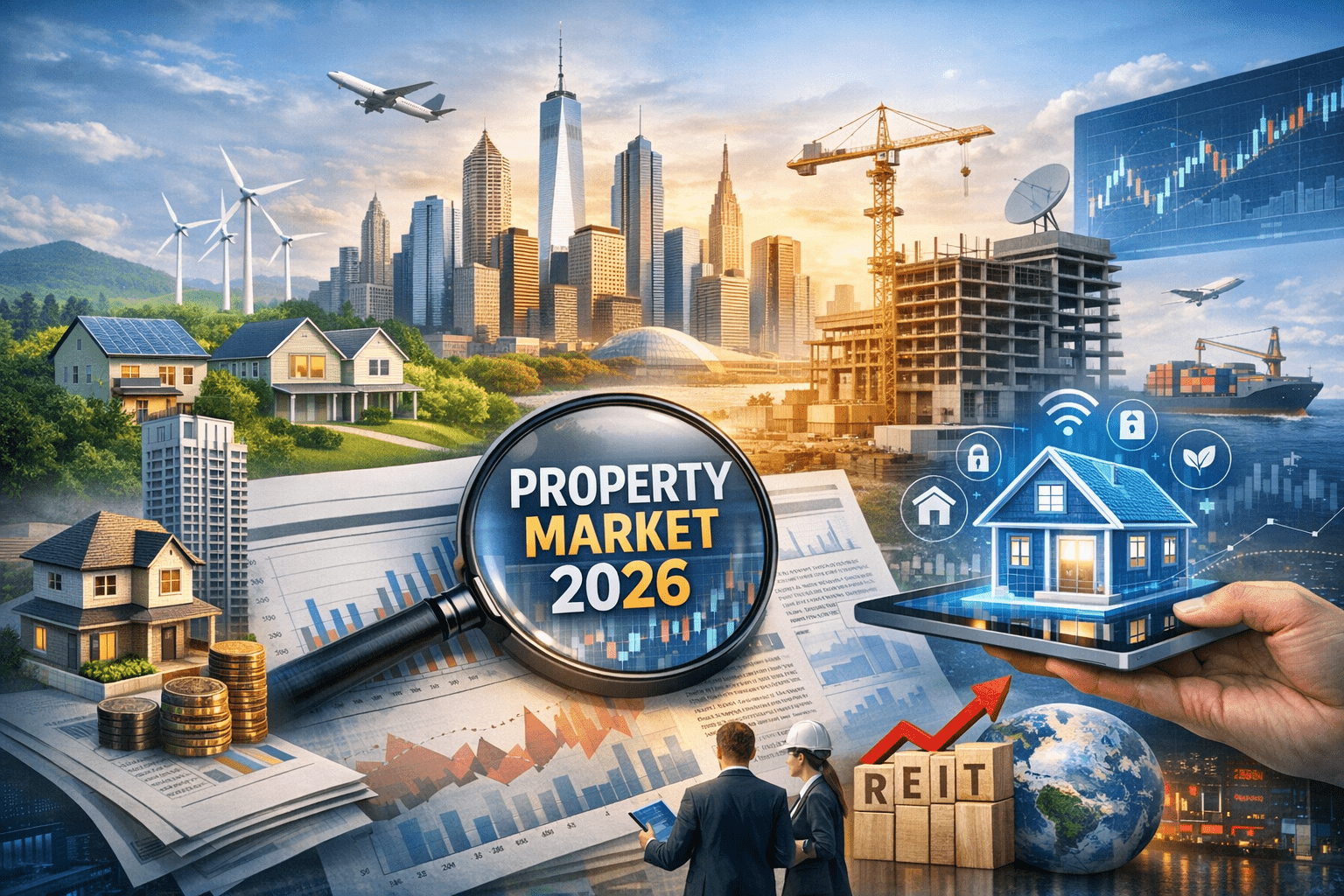
The global real estate sector is entering a defining phase in 2026. After years of disruption caused by the pandemic, interest rate cycles, inflationary pressures, and rapid technological shifts, the property market is now recalibrating itself. Investors, homebuyers, developers, and policymakers are all closely watching how trends such as affordable housing, smart cities, sustainability, and digital transactions are reshaping the real estate ecosystem.
This in-depth property news blog explores the latest developments in residential, commercial, and industrial real estate, highlights key investment opportunities, analyzes government policies, and provides a forward-looking outlook for the coming years. Whether you are a first-time buyer, a seasoned investor, or a real estate professional, this comprehensive guide will help you understand where the property market is heading in 2026 and beyond.
Global Real Estate Market Overview in 2026
Property Sector Update 2026
In 2026, the global property market is showing signs of stability and cautious optimism. After aggressive interest rate hikes in previous years to control inflation, many central banks have either paused or gradually eased rates. This shift has improved affordability and revived buyer sentiment in several regions.
Emerging markets are witnessing strong demand due to urbanization and population growth, while developed economies are focusing on redevelopment, sustainability, and efficient land use. International investors are also returning to real estate as a hedge against inflation and currency volatility.
Key global trends include:
- Increased demand for mixed-use developments
- Growth of green and energy-efficient buildings
- Expansion of data centers and logistics properties
- Rising interest in secondary and tier-2 cities
Residential Real Estate Trends
Property Sector Update 2026
Rising Demand for Affordable Housing
One of the most important property news stories of 2026 is the renewed focus on affordable housing. Governments and private developers are working together to address housing shortages in urban areas. Incentives such as tax benefits, subsidized land, and lower interest rates are encouraging developers to build homes for middle- and lower-income groups.
Affordable housing projects are no longer limited to basic designs. Modern developments now include community spaces, green areas, and essential amenities, making them attractive to young families and working professionals.
Shift Toward Suburban and Peripheral Areas
Remote and hybrid work models have permanently changed residential preferences. In 2026, many buyers are choosing larger homes in suburban and peripheral locations over compact apartments in city centers. Improved infrastructure, better connectivity, and lower property prices are driving this trend.
Suburban housing projects with integrated schools, healthcare facilities, and retail spaces are gaining popularity, especially among millennials and Gen Z buyers.
Growth of Rental Housing and Co-Living
The rental housing segment continues to expand due to high property prices and increased mobility among professionals. Co-living spaces, offering fully furnished rooms with shared amenities, are becoming mainstream in major cities.
In 2026, institutional investors are entering the rental housing market, improving standards, transparency, and tenant experience. This professionalization is expected to bring long-term stability to the rental sector.
Commercial Real Estate: New Opportunities and Challenges
Property Sector Update 2026
Office Space Evolution
The office real estate segment has undergone significant transformation. While traditional office demand declined in previous years, 2026 is witnessing a steady recovery driven by flexible workspaces and hybrid office models.
Companies are now prioritizing quality over quantity, choosing well-located offices with advanced technology, wellness features, and sustainable design. Flexible office spaces and managed workspaces are emerging as preferred solutions for startups and multinational corporations alike.
Retail Real Estate Revival
Retail real estate is making a strong comeback in 2026. Shopping malls and high-street retail spaces are being reimagined as experience-driven destinations. Entertainment zones, food courts, cultural events, and interactive stores are attracting footfall.
Retailers are adopting an omnichannel strategy, integrating physical stores with digital platforms to enhance customer engagement. This approach is helping retail real estate regain relevance in the digital age.
Hospitality and Tourism-Driven Growth
With global travel rebounding, hospitality real estate is witnessing renewed investment. Hotels, resorts, serviced apartments, and vacation homes are in high demand, particularly in tourist-friendly destinations.
In 2026, sustainable tourism and eco-friendly resorts are attracting environmentally conscious travelers, creating new opportunities for developers and investors.
Industrial and Logistics Real Estate Boom
One of the fastest-growing segments in 2026 is industrial and logistics real estate. The rise of e-commerce, quick commerce, and global supply chain restructuring has increased demand for warehouses, fulfillment centers, and logistics parks.
Strategically located properties near highways, ports, and urban centers are commanding premium valuations. Automation, robotics, and smart warehousing technologies are becoming standard features, improving efficiency and reducing operational costs.
Cold storage facilities are also gaining importance due to growth in online grocery delivery, pharmaceuticals, and food processing industries.
Impact of Technology on Real Estate
PropTech Innovation
Property technology, or PropTech, is revolutionizing the real estate industry. In 2026, digital platforms are simplifying property search, valuation, and transactions. Virtual property tours, AI-powered recommendations, and blockchain-based documentation are improving transparency and trust.
Smart contracts and digital land records are reducing fraud and transaction delays, making real estate deals faster and more secure.
Smart Homes and Buildings
Smart home technology is becoming a standard expectation rather than a luxury. Homebuyers are increasingly looking for properties equipped with smart security systems, energy management solutions, and home automation features.
Commercial buildings are adopting smart systems to optimize energy usage, enhance safety, and improve occupant comfort. These innovations are also helping property owners reduce operational costs and carbon footprints.
Sustainability and Green Real Estate
Sustainability is no longer optional in 2026; it is a core requirement. Green buildings with energy-efficient designs, renewable energy integration, and water conservation systems are in high demand.
Governments are offering incentives for sustainable construction, while investors are prioritizing environmentally responsible projects. Green certifications are enhancing property value and attracting premium tenants.
Developers are also focusing on climate-resilient construction to mitigate risks from extreme weather events and rising temperatures.
Government Policies and Regulatory Updates
Housing Policy Reforms
In 2026, several governments have introduced policy reforms to boost housing supply and improve affordability. Measures include faster approval processes, reduced stamp duties, and incentives for first-time homebuyers.
Urban planning policies are encouraging higher density development near transport hubs, promoting efficient land use and reducing urban sprawl.
Foreign Investment Regulations
Many countries are relaxing foreign investment norms in real estate to attract global capital. Transparent regulations, investor-friendly tax structures, and improved ease of doing business are making property markets more accessible to international investors.
Real Estate Investment Outlook 2026
Residential Investments
Residential real estate remains a stable long-term investment option. Affordable housing, rental properties, and suburban developments are expected to deliver consistent returns.
Commercial and REITs
Real Estate Investment Trusts (REITs) are gaining popularity among retail investors. In 2026, REITs focused on office, retail, and logistics assets are offering attractive yields and liquidity.
Emerging Opportunities
Alternative real estate assets such as data centers, senior housing, student accommodation, and healthcare facilities are emerging as high-growth investment avenues.
Challenges Facing the Property Market
Despite positive momentum, the real estate sector faces several challenges:
- Rising construction costs due to material and labor shortages
- Regulatory compliance and approval delays in some regions
- Affordability concerns for first-time buyers
- Environmental risks and climate-related uncertainties
Addressing these challenges will require collaboration between governments, developers, financial institutions, and technology providers.
Future Outlook: What Lies Ahead
Looking ahead, the property market is expected to become more transparent, technology-driven, and sustainable. Urbanization, demographic changes, and evolving lifestyles will continue to shape real estate demand.
Cities of the future will focus on smart infrastructure, green mobility, and inclusive housing solutions. Developers who embrace innovation and sustainability will be best positioned to succeed in the competitive real estate landscape.
Conclusion
Property news in 2026 reflects a sector that is adapting, innovating, and preparing for long-term growth. While challenges remain, strong fundamentals, supportive policies, and technological advancements are creating new opportunities across residential, commercial, and industrial real estate.
For buyers, investors, and industry stakeholders, staying informed and strategic is essential. As the real estate market evolves, those who understand emerging trends and align their decisions accordingly will benefit the most from the dynamic property landscape of 2026 and beyond.
Visit My Page (Click Here)